Spider Fittings for Glass Facades: Types, Arms and Where to Use Them
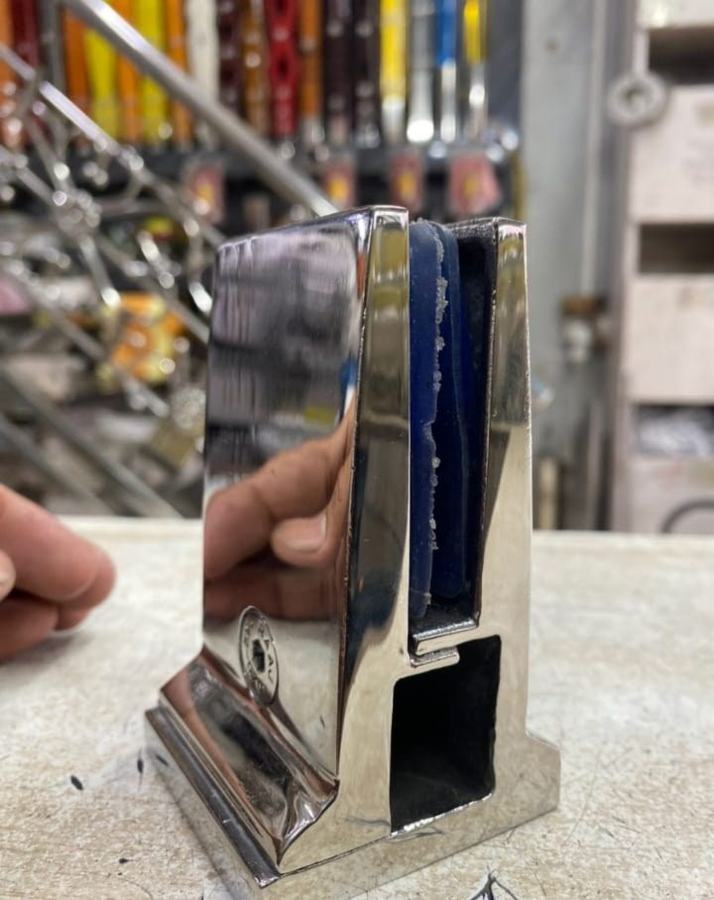
Those star-shaped stainless fittings holding large glass facades are spider fittings. They let glass span big openings with almost no visible frame.
How they work
A spider fitting bolts to a structural support (a post, fin or truss) and reaches out with 1 to 4 arms. Each arm connects to a routel — a bolt that passes through a countersunk hole in the toughened glass. Load transfers from glass to structure through these points instead of a frame.
Arm configurations
- 1-arm — edges and perimeters where only one panel corner is supported
- 2-arm — along vertical or horizontal edges between two panels
- 3-arm — junctions of three panels, often at facade edges
- 4-arm — the classic centre fitting where four panel corners meet
Where they are used
- Shopfronts and showroom facades
- Atriums and curtain walls
- Entrance canopies and skylights
- Feature glass walls in hotels and offices
Critical requirements
- Glass must be toughened and pre-drilled/countersunk by the glass processor — never drill on site
- Use SS 316 for external facades; 304 for protected interiors
- Structural design should be checked by an engineer for wind load
- Order fittings and routels together so thread sizes match
Finish
Mirror polish is traditional for facades; satin is increasingly used for a softer look. PVD black is popular in contemporary retail. Compare finishes.
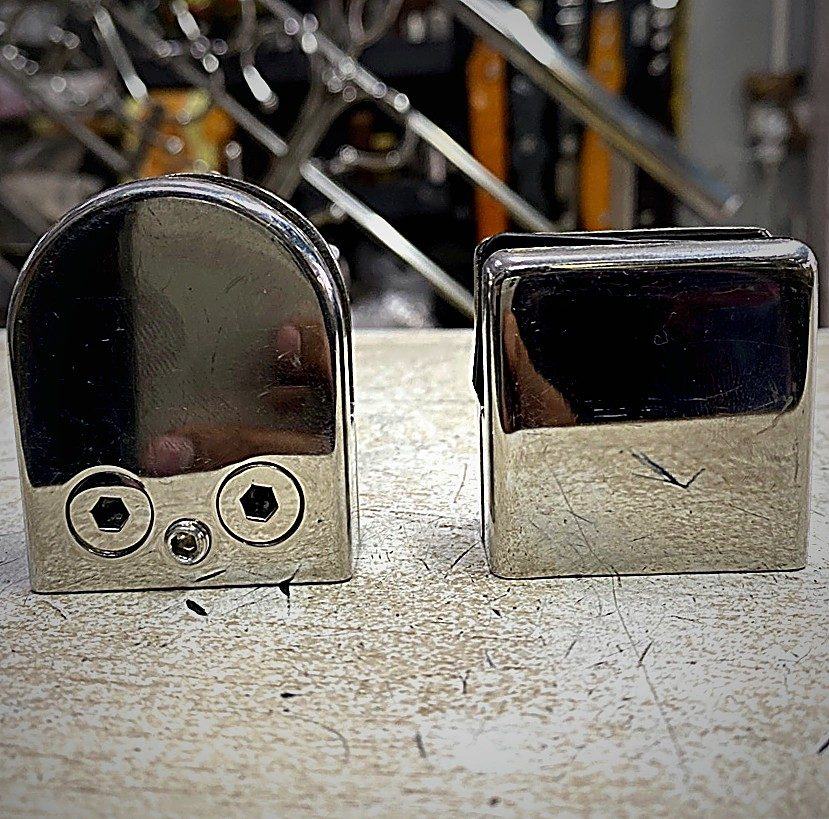
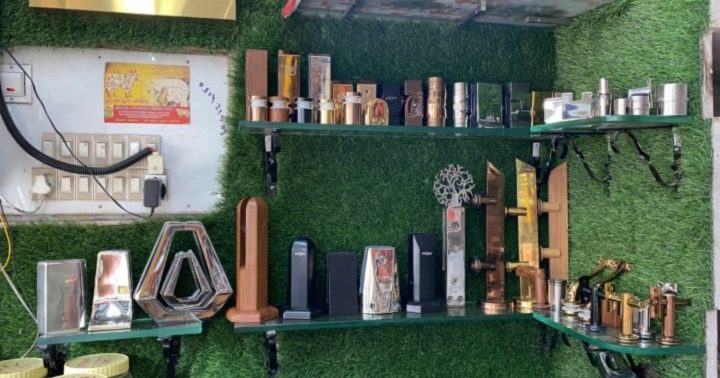
Kiran Steel India stocks spider fittings, routels and patch fittings in 304 and 316.
Need this for a project?
Get steel, glass hardware and PVD finishes cut to your exact spec — fast quotes from Bengaluru.
Get a Free Quote →